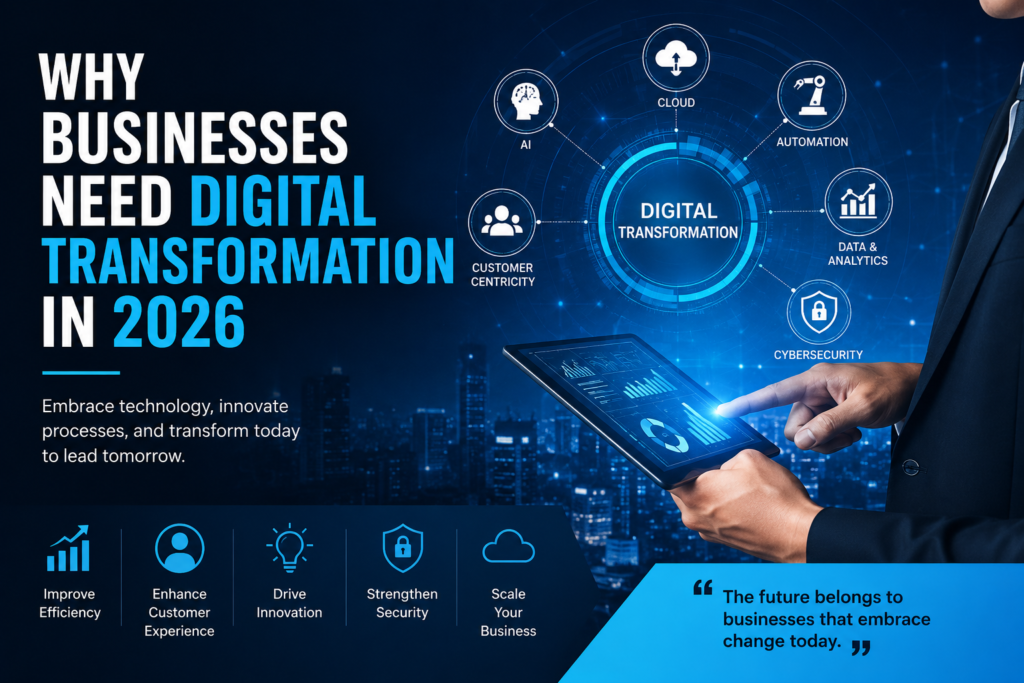
In 2026, digital transformation is no longer just a competitive advantage—it’s a business necessity. As customer expectations continue to evolve and technologies like artificial intelligence (AI), cloud computing, automation, and data analytics become mainstream, organizations that fail to embrace digital transformation risk falling behind. Whether you’re a startup, a small business, or a large enterprise, investing in digital technologies is key to staying relevant, efficient, and profitable.
What Is Digital Transformation?
Digital transformation is the process of integrating digital technologies into every aspect of a business. It involves improving operations, customer experiences, and business models by leveraging modern technologies such as AI, cloud services, automation, the Internet of Things (IoT), and advanced analytics.
Digital transformation isn’t just about adopting new software—it’s about creating a culture of innovation and continuous improvement.
Why Digital Transformation Matters in 2026
1. Customers Expect Digital-First Experiences
Today’s customers expect businesses to provide seamless online experiences. They want fast websites, mobile-friendly platforms, personalized recommendations, instant support, and secure online payments.
Companies that deliver these experiences build stronger customer relationships and improve brand loyalty.
2. Artificial Intelligence Is Changing Every Industry
AI has become an essential business tool. Companies are using AI to:
- Automate customer support with chatbots
- Predict customer behavior
- Generate marketing content
- Analyze business data
- Improve decision-making
Businesses that adopt AI can reduce costs while improving productivity and customer satisfaction.
3. Automation Improves Efficiency
Manual processes consume time and increase the chances of human error.
Automation helps businesses:
- Process invoices
- Manage inventory
- Send marketing emails
- Schedule appointments
- Generate reports
Employees can then focus on strategic work instead of repetitive tasks.
4. Data Drives Better Decisions
Modern businesses generate massive amounts of data every day.
Using analytics tools allows organizations to:
- Understand customer preferences
- Identify market trends
- Measure campaign performance
- Forecast sales
- Improve operational efficiency
Data-driven decisions are more accurate than relying on intuition alone.
5. Cybersecurity Is More Important Than Ever
As businesses become more digital, cybersecurity becomes a top priority.
Digital transformation includes investing in:
- Multi-factor authentication
- Data encryption
- Cloud security
- Regular software updates
- Employee cybersecurity training
Protecting customer data builds trust and helps businesses comply with privacy regulations.
6. Cloud Computing Provides Flexibility
Cloud platforms allow businesses to work from anywhere while reducing infrastructure costs.
Benefits include:
- Remote collaboration
- Automatic backups
- Easy scalability
- Improved reliability
- Faster deployment of new applications
Cloud technology also enables businesses to respond quickly to changing market demands.
7. Competitive Advantage
Companies embracing digital transformation innovate faster than competitors.
They can:
- Launch products quickly
- Respond to customer feedback
- Optimize operations
- Expand into new markets
Businesses that delay digital transformation often struggle to keep up with digitally mature competitors.
Follow Us:
Facebook: https://www.facebook.com/TrinetraVibesMedia
Instagram: https://www.instagram.com/trinetravibesmedia
LinkedIn: https://www.linkedin.com/company/trinetravibesmedia
Twitter: https://x.com/trinetravibes
YouTube: https://www.youtube.com/@TrinetraVibesMedia