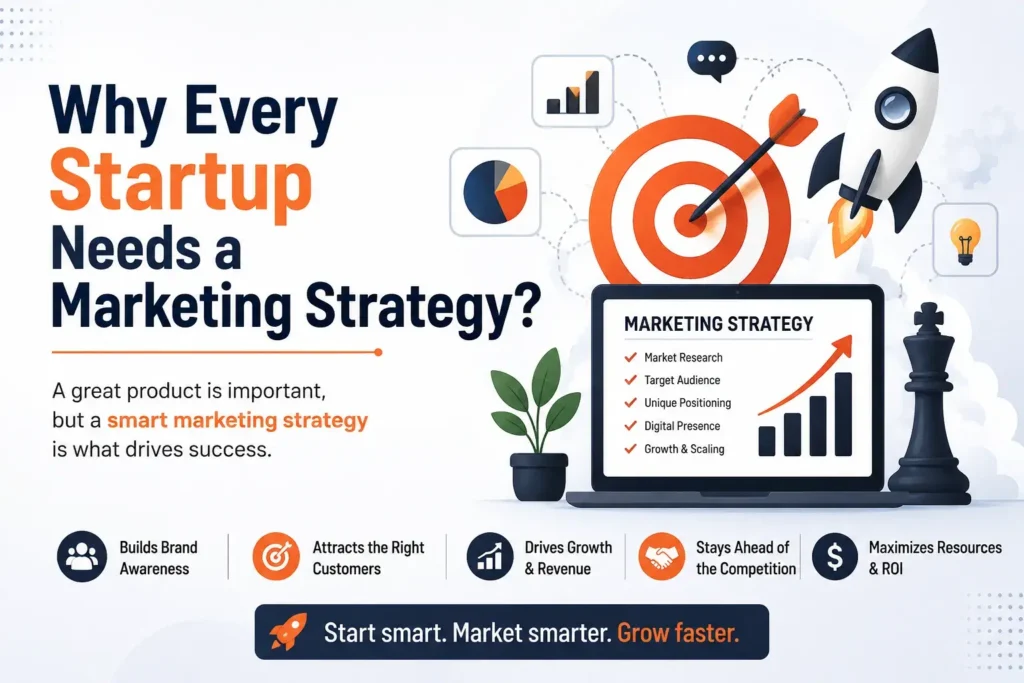
Launching a startup is an exciting journey filled with innovation, passion, and ambition. However, many startups make the mistake of believing that a great product alone is enough to achieve success. In reality, even the most innovative products can fail if the right audience never discovers them.
A well-defined marketing strategy is the foundation that helps startups build awareness, attract customers, and grow sustainably. Instead of relying on luck or random promotional efforts, a strategic marketing plan ensures every marketing activity contributes to measurable business growth.
In this blog, we’ll explore why every startup needs a marketing strategy and how it can become the driving force behind long-term success.
What Is a Marketing Strategy?
A marketing strategy is a comprehensive plan that outlines how a business will attract, engage, and retain customers. It defines your target audience, brand messaging, marketing channels, goals, and performance metrics.
Rather than focusing on one campaign, a marketing strategy provides a roadmap for consistent business growth.
Why Marketing Matters for Startups
Startups often operate with limited budgets, smaller teams, and intense competition. Every marketing dollar counts, making strategy more important than ever.
Without a marketing strategy, startups may:
- Spend money on ineffective advertising
- Target the wrong audience
- Deliver inconsistent messaging
- Generate low-quality leads
- Struggle to build brand recognition
A clear strategy helps avoid these costly mistakes.
1. Builds Brand Awareness
Your startup may offer an excellent solution, but customers can’t buy what they don’t know exists.
Marketing helps introduce your brand to potential customers through:
- Search Engine Optimization (SEO)
- Social Media Marketing
- Content Marketing
- Paid Advertising
- Email Campaigns
- Video Marketing
Consistent visibility builds trust and keeps your brand top-of-mind.
2. Helps Identify Your Ideal Customers
One of the biggest startup mistakes is trying to market to everyone.
A marketing strategy identifies:
- Customer demographics
- Interests
- Pain points
- Buying behavior
- Preferred communication channels
Understanding your audience allows you to create personalized campaigns that generate better results.
3. Maximizes Limited Marketing Budgets
Most startups don’t have massive advertising budgets.
A marketing strategy helps prioritize investments by focusing on channels that deliver the highest return, such as:
- Organic SEO
- Content Marketing
- Email Marketing
- Local SEO
- Social Media Engagement
This reduces unnecessary spending while improving ROI.
4. Creates a Strong Brand Identity
Successful startups are remembered because they build memorable brands.
A marketing strategy defines:
- Brand voice
- Visual identity
- Logo usage
- Color palette
- Messaging style
- Customer experience
A consistent brand identity builds credibility and encourages customer loyalty.
5. Generates High-Quality Leads
Marketing isn’t just about traffic—it’s about attracting the right people.
An effective strategy focuses on lead generation through:
- Landing pages
- SEO blogs
- Lead magnets
- Email subscriptions
- Paid campaigns
- Social media ads
Higher-quality leads often result in higher conversion rates and increased revenue.
6. Supports Long-Term Business Growth
Marketing creates momentum over time.
Instead of chasing one-time sales, startups can build systems that consistently attract and convert customers through:
- Evergreen content
- Organic search rankings
- Customer referrals
- Email nurturing
- Social media communities
This creates sustainable growth instead of short-term spikes.
7. Gives You a Competitive Advantage
Every industry has competition.
A strategic marketing plan helps you stand out by highlighting:
- Unique selling points (USPs)
- Better customer service
- Innovative features
- Stronger brand storytelling
- Customer success stories
Differentiation is often the deciding factor for potential customers.
8. Improves Customer Trust
Customers buy from brands they trust.
Marketing builds credibility through:
- Customer testimonials
- Reviews
- Case studies
- Educational blog posts
- Professional website design
- Active social media presence
Trust leads to higher conversions and repeat business.
9. Enables Data-Driven Decisions
Modern marketing provides valuable insights into customer behavior.
Track important metrics like:
- Website traffic
- Conversion rate
- Customer acquisition cost (CAC)
- Return on Ad Spend (ROAS)
- Click-through rate (CTR)
- Customer Lifetime Value (CLV)
Analyzing this data helps optimize campaigns and improve performance over time.
10. Increases Revenue
Ultimately, the goal of marketing is business growth.
A well-executed strategy helps startups:
- Reach more potential customers
- Generate qualified leads
- Improve conversion rates
- Increase customer retention
- Grow recurring revenue
Effective marketing transforms awareness into sales and long-term profitability.